And now the stats:
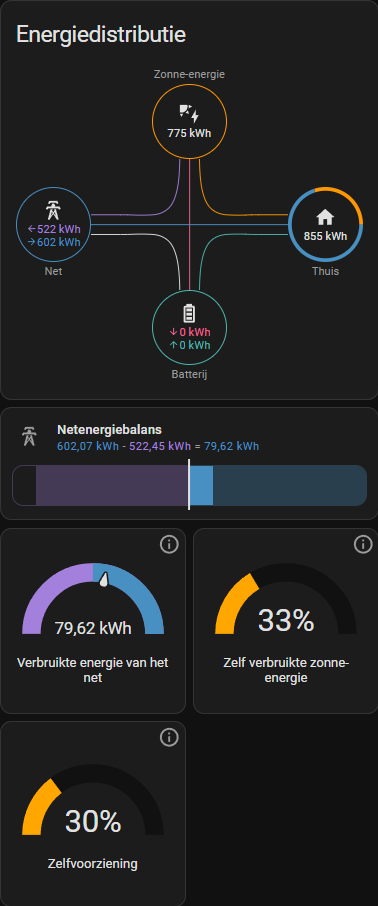
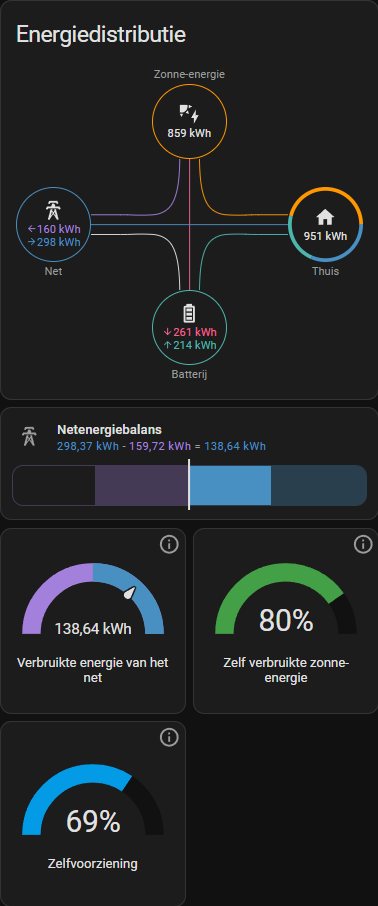
As you can see, there has been a huge jump in self-consumed solar energy: from 33% to 80%. Both the battery system and charging the EV directly with solar power are responsible for this. This means we are using far more of our own generated energy, which greatly helps the energy transition.
The data under "battery" is about 30 kWh too low due to a statistics reset when I updated the Marsteks with new firmware and performed a factory reset. Starting next week, I will monitor both units externally so I am no longer dependent on their internal logging.
Anyway, I have moved about 240 kWh of solar energy (which required consuming almost 300 kWh of solar energy).
Costs: 300 * €0.05 = €15.00
Revenue: 240 * €0.21 = €50.40
Profit -> €35.40
In 2027, the profit will come even closer to a full €50, as the value of the solar energy I return to the grid will drop to just over €0.01.
Will this make us rich? No... But it gives us more freedom to use our own energy when we want to. And if you are careful with how much you spend on your battery system (we spent under €2,500 for 10 kWh), you will be able to get a return on your investment in about 6 to 7 years.
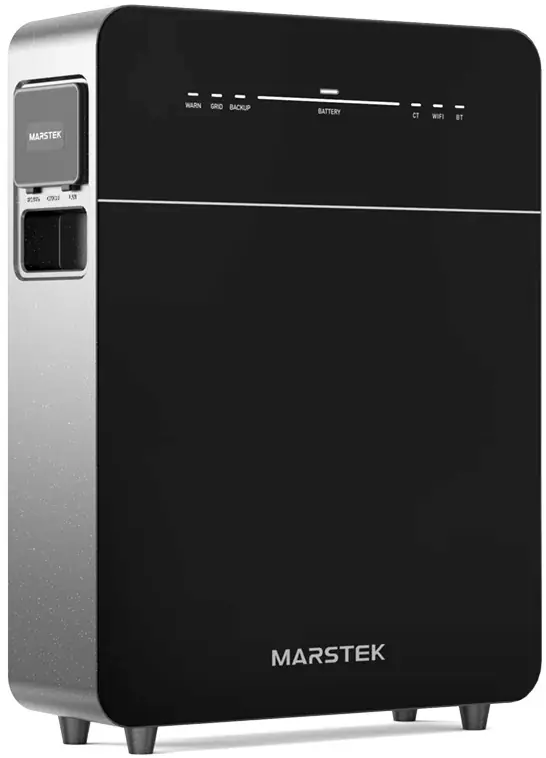 Last month I published a blog post about our first steps with a home battery. Since July was the first full month with our battery system, I thought it would be a nice idea to compare May & July to see what the actual impact is.